

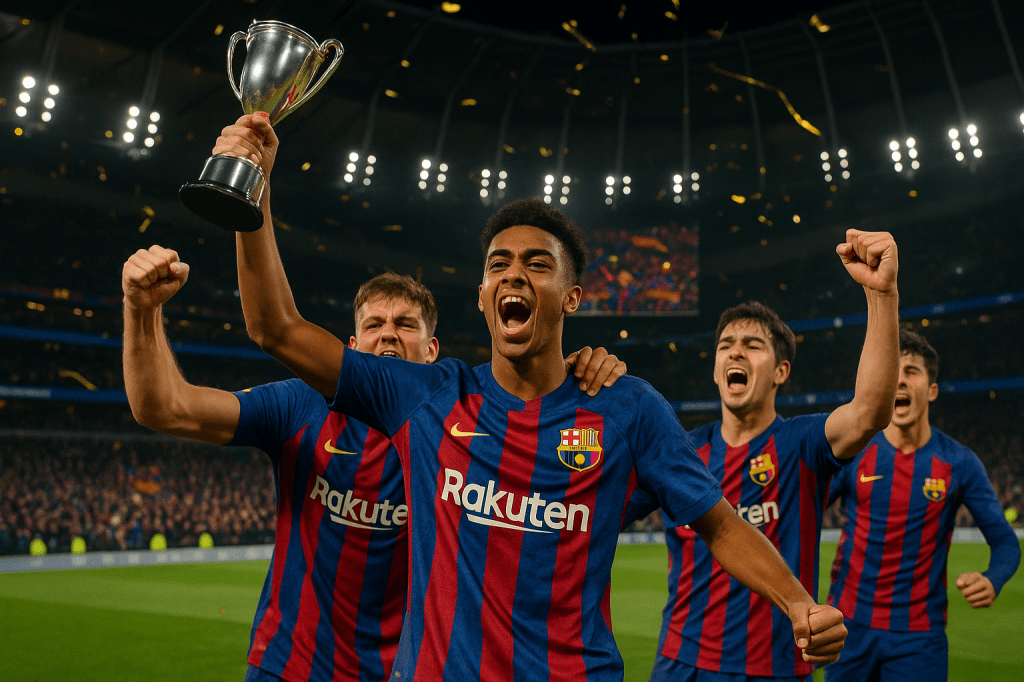
The beautiful game delivers its cruelest lesson
Football, in its infinite capacity for both ecstasy and agony, delivered its most profound lesson on Saturday night. At the BayArena and Tottenham Hotspur Stadium, two finals reached their dramatic conclusions, one confirming methodical excellence, the other decided by the narrowest of margins in circumstances that will haunt the losers for years to come.
CSKA Moskva claimed their first trophy in the club’s history with a performance that epitomised everything they have brought to this tournament. Meanwhile, in North London, Tottenham’s impossible dream died the most agonising death imaginable, Barcelona snatching victory from the jaws of defeat through Fictional Extra Time after 180 minutes had failed to separate two evenly-matched sides.
CSKA’s professional masterclass completes historic achievement
Bayer Leverkusen 1-1 CSKA Moskva (agg: 1-3)
There was something poetic about the manner in which CSKA Moskva completed their Youth Shield triumph. Having dominated the first leg through patient build-up and clinical finishing, they travelled to Germany knowing that professionalism rather than brilliance would be required to secure the club’s first piece of silverware.
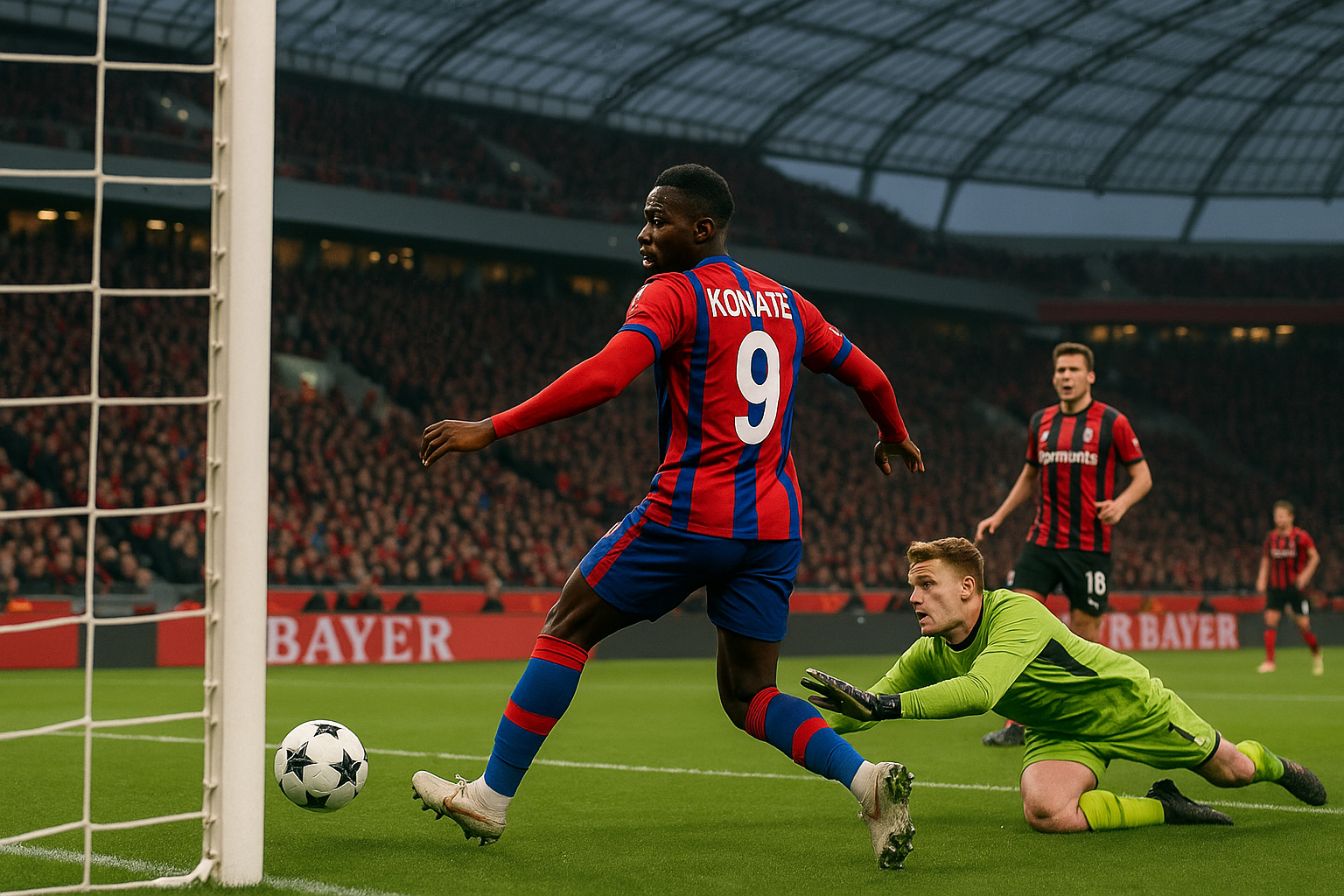
The script could not have been written more perfectly. Karim Konaté, the tournament’s leading marksman and architect of so many crucial moments, struck again in the eighth minute with a finish that encapsulated everything about CSKA’s campaign. Franco Mastantuono’s incisive pass found the striker, whose deft flick caught Jonas Urbig off balance and rolled into the net. It was Konaté’s sixth goal of the knockout rounds, a tally that speaks to both individual brilliance and collective functionality.
Leverkusen’s response was predictable but ultimately futile. Facing a three-goal deficit, they needed to score early and often, yet their approach remained curiously cautious for a team with nothing to lose. When Vanja Vlahović finally found the equaliser on 27 minutes, firing home after Ayman El Wafi’s intelligent play, it felt more like consolation than catalyst.
The statistics told the story of a team running out of ideas. Despite enjoying 56% possession and the comfort of home surroundings, Leverkusen managed just seven shots to CSKA’s fifteen. Their high-intensity pressing game, which had served them so well throughout the campaign, was systematically dismantled by opponents who had mastered the art of defensive solidity without sacrificing attacking threat.
CSKA’s tactical discipline was exemplary. They defended with the desperation of men protecting something precious, yet remained dangerous on the counter-attack throughout. Nestory Irankunda’s pace and directness constantly threatened Leverkusen’s high defensive line, while Mastantuono’s creativity ensured that the Germans could never commit men forward with complete abandon.
When the final whistle sounded, the celebrations were muted but meaningful. Chris Meida’s post-match comments captured the significance perfectly: “It may be a consolation trophy – but the youth shield is the first trophy in CSKA history.” The self-deprecating humour could not disguise the magnitude of the achievement, nor should it. As Leicester’s Doug Earle rightly observed, only those who have never won anything themselves would dare call this a consolation prize.
Tottenham’s fairytale dies in FET heartbreak
Tottenham Hotspur 1-2 Barcelona (agg: 3-3, Barcelona win 5-4 after FET)
If CSKA’s triumph was the reward for methodical excellence, Barcelona’s Youth Cup victory was secured through the kind of dramatic finale that football writes but rarely delivers. For 180 minutes, these two sides could not be separated. When the dust settled after Fictional Extra Time, Barcelona had prevailed 5-4 on aggregate, but the scoreline tells only a fraction of this extraordinary story.
The evening began with Barcelona carrying the weight of expectation and the burden of their first-leg deficit. They needed to score twice while keeping Tottenham out, a task that seemed well within their capabilities given their superior individual quality. Yet Pedro Vilar’s team had spent this entire campaign defying logic, and there was no reason to believe they would start bowing to convention now.
Barcelona’s early pressure finally told when Kobbie Mainoo rose highest from Lamine Yamal’s corner to power home a header that levelled the aggregate scores. The goal came in the 23rd minute, reward for sustained pressure that had seen Tottenham’s defensive resolve tested to its limits. For a moment, the natural order seemed to be reasserting itself.
But Tottenham, as they have done throughout this remarkable campaign, refused to read the script. Gabriel Vidović’s response was swift and decisive, the Croatian striker capitalising on slack marking to fire past Ander Astralaga and restore his side’s advantage. The Tottenham Hotspur Stadium erupted with the kind of noise reserved for moments when dreams seem within touching distance.
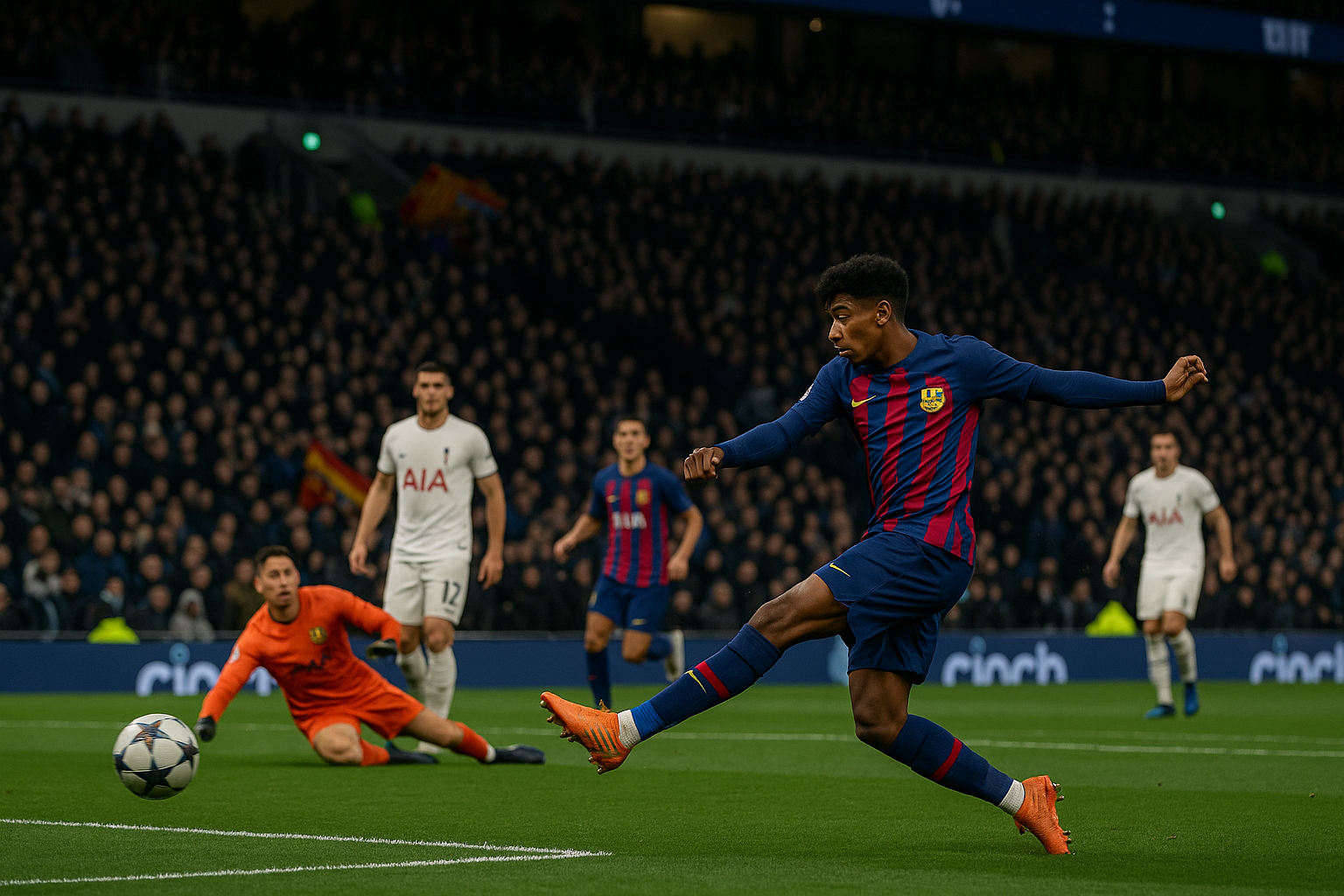
The defining moment came on the hour mark, substitute introductions coinciding with Yamal’s moment of individual brilliance. The teenage sensation, carrying the weight of Barcelona’s expectations and the burden of his £48 million valuation, found the bottom corner with a finish that combined technical excellence with psychological strength. The aggregate scores were level, Tottenham’s advantage had evaporated, and extra time beckoned.
Yet even this dramatic conclusion was insufficient to separate these evenly-matched sides. The statistics reflected the evening’s parity: possession split 51% to 49% in Tottenham’s favour, shots marginally in Barcelona’s favour at 14 to 10. This was knockout football at its purest, two teams giving everything in pursuit of glory.
Fictional Extra Time would prove Barcelona’s salvation and Tottenham’s heartbreak. The Catalans’ 2-1 victory in this decisive period gave them a 5-4 overall triumph, but the narrow margin could not disguise the epic nature of this contest. For Tottenham, the realisation that they had come so close to completing the most unlikely triumph in recent youth football history will take time to process.
Pedro Vilar’s achievement should not be diminished by the manner of its conclusion. His team’s journey from apparent elimination to within touching distance of glory represents one of the great underdog stories in recent memory. They have proven that belief, organisation, and collective spirit can bridge even the most daunting gaps in individual quality.
A tournament that delivered on every promise
These finals provided the perfect conclusion to a tournament that has consistently delivered drama, quality, and unforgettable moments. CSKA’s triumph represents the reward for sustained excellence, their systematic approach to knockout football yielding the ultimate prize. Barcelona’s victory, secured by the narrowest of margins, demonstrates that quality will eventually tell, even when faced with the most determined opposition.
The Youth Shield travels to Moscow for the first time in CSKA’s history, a tangible reward for a campaign that has established them as the tournament’s most complete side. The Youth Cup returns to Catalonia, Barcelona’s triumph secured through the kind of dramatic finale that will be discussed for years to come.
For the neutrals, these tournaments have provided everything that makes football the beautiful game. For CSKA and Barcelona, they represent the culmination of months of preparation, sacrifice, and unwavering belief. For Leverkusen and Tottenham, they offer the cruel but valuable lesson that sport’s greatest rewards are reserved for those capable of seizing the finest of margins.
The 2025 Youth Cup and Shield campaigns are concluded, but their memories will endure long after the final celebrations have ended and the last tears have been shed.


 Top 100
Leave a reply to Youth Cup Carnage – Top 100 Cancel reply