

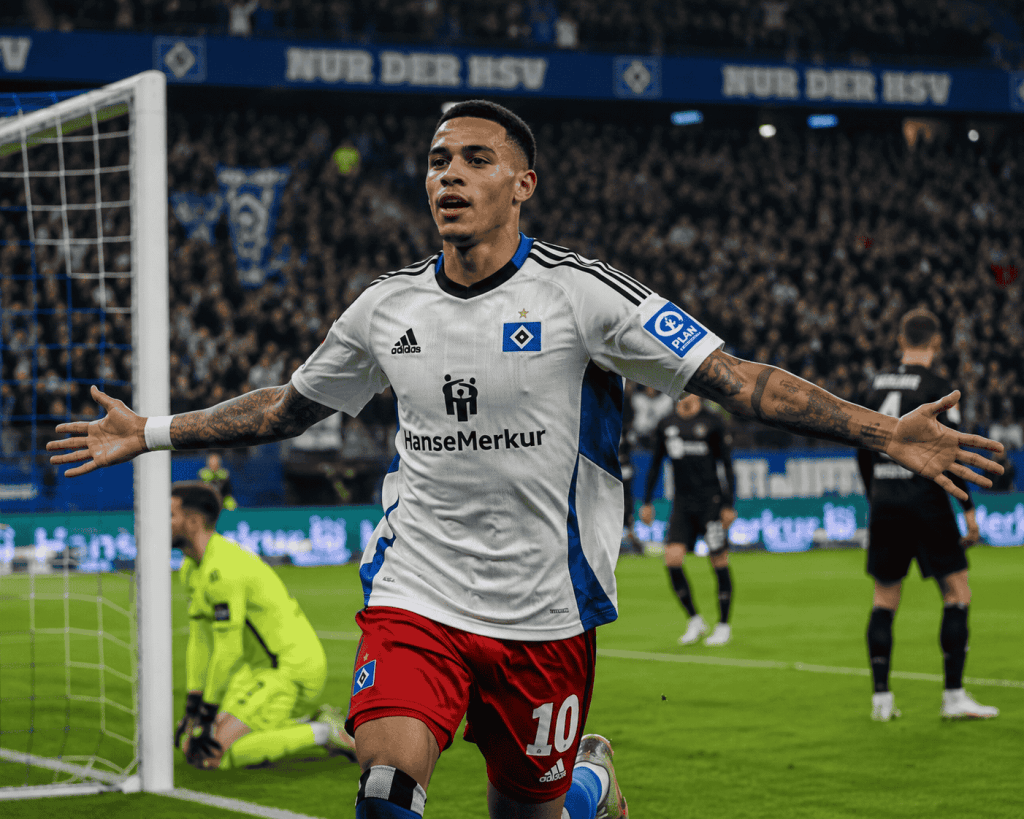
Goals Galore for Der Dino Fans
Twelfth place, close to £50m transfer profit, and goals at both ends all season long. In Season 27 Hamburg didn’t just consolidate in Division 1 — we entertained.
Season 27 saw Hamburg consolidate our place in Division 1 with a significant improvement across the board.
After surviving by the skin of our teeth in S26, the objective was simple: tighten up defensively without sacrificing the attacking football that had made us entertaining, if occasionally terrifying to support.
By the end of the season, we’d achieved exactly that.
Last Season
In S26 we finished 15th, thanks largely to Aston Villa failing to win on the final day. The numbers were ugly.
We scored a respectable 63 goals but conceded 85 — the worst defensive record in Division 1. Only bottom club Arsenal lost more matches than Hamburg.
A team capable of scoring against anyone could also concede against anyone.
Usually several.
The Plan: Tighten Up at the Back, Keep Firing up Front
A few tactical tweaks produced an encouraging start.
After six matches we found ourselves sitting 5th in Division 1 and dreaming of qualifying for SMFA football.
That proved slightly optimistic.
The season settled into something more familiar, and at various points we found ourselves looking nervously over our shoulder rather than up the table.
Still, unlike the previous campaign, we never truly looked doomed.
The attack remained dangerous and, crucially, the defence became just competent enough.
Which, by Hamburg standards, felt revolutionary.
Improving the Defence
Much of the work was done in the transfer market towards the end of the season.
Iñigo Martínez arrived from Valencia as part of the deal that sent Marc Guiu to Spain, while Stefan de Vrij joined from Anderlecht in exchange for Mario Pašalić.
De Vrij duly dropped to 90, but both he and Martínez add valuable experience and depth. Remarkably, they’re also younger than Nicolás Otamendi, whom they effectively replace in the squad hierarchy.
Adam Marušić arrived from Espanyol’s so-called “youth” setup to provide cover on both flanks. Expensive perhaps, considering Jordan James headed the other way, but versatility has value.
Marušić joins José Gayá, Nelson Semedo, Juan Jesus, Joe Rodon and Thomas Partey in what now looks like a far deeper defensive unit than the one that started S27.
Indeed, during the final weeks of the season, with survival largely secured, we began experimenting with more conservative approaches against stronger opponents.
The results were encouraging.
We no longer conceded goals like a Trump peace deal, and we even picked up points in fixtures where a high-scoring defeat might previously have felt inevitable.
The Marquee Signing: Enter KDB
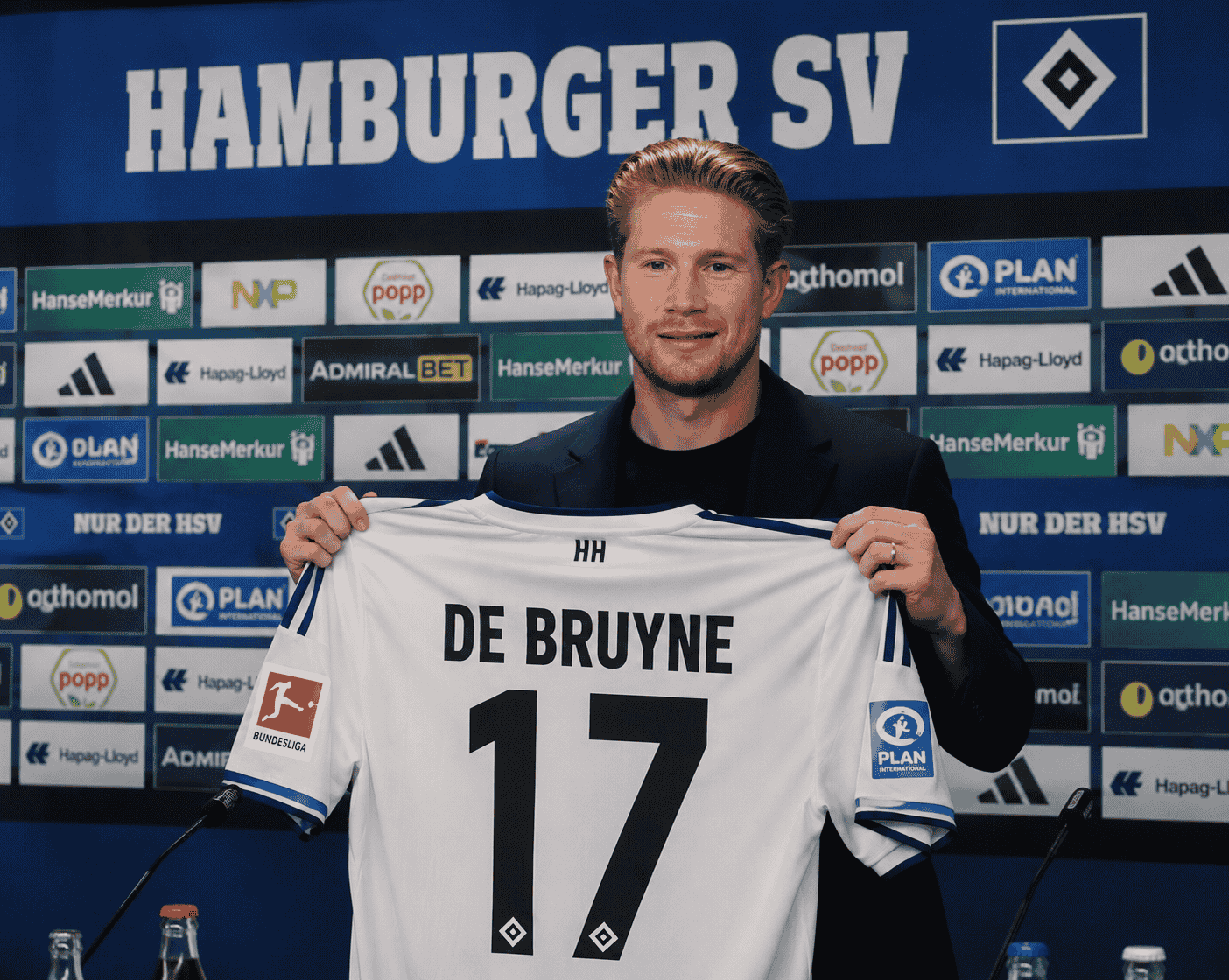
The biggest move of all was the arrival of Kevin De Bruyne.
The Belgian legend joined from Anderlecht as part of the Otamendi/de Arrascaeta deal and instantly became the highest-rated player at the club.
The club shop was particularly delighted.
Ever since Kevin Macedo was sold, staff had been complaining about a warehouse full of unsold “Kevin” merchandise. Fortunately, De Bruyne should help shift a few shirts.
On the pitch, his arrival opens up new tactical possibilities. The familiar 4-2-3-1 remains available, but a 4-3-3 built around Casemiro, De Bruyne and young Kees Smit in midfield suddenly looks very appealing.
In the Black
For perhaps the first time in Hamburg history, I checked the transfer ledger and discovered something extraordinary:
We made a profit.
Hamburg spent £145.9m and received £194.2m, generating a positive balance of almost £50m.
That may not sound exciting, but with facilities now draining money every week, it’s no small achievement.
The accountants were delighted.
The supporters remain unconvinced that balancing the books counts as entertainment.
What the Numbers Say
The improvement was real.
| Metric | S26 | S27 | Change |
|---|---|---|---|
| Goals Scored | 63 | 72 | +9 |
| Goals Conceded | 85 | 77 | −8 |
| Goal Difference | −22 | −5 | +17 |
| Points | 37 | 50 | +13 |
| Position | 15th | 12th | +3 |
A +17 goal-difference swing translated directly into 13 additional points.
The attack improved. The defence improved. The table improved.
Most importantly, the Volksparkstadion became a genuine advantage. Hamburg finished with an 11-3-5 home record, collecting 36 of their 50 points in front of their own supporters.
Away from home we remained considerably less convincing, recording just 3 wins from 19 matches.
The contrast was stark.
At home we looked like European contenders.
Away we looked more like a team hoping the sat-nav would eventually guide us back to Hamburg.
The Entertainers
Despite the defensive improvements, Hamburg remained the division’s premier box-office act — and this time the numbers prove it.
Our 38 matches produced 149 goals — 72 scored, 77 conceded — more than any other side in Division 1. That’s 3.92 goals a game, comfortably the highest in the league. By contrast, champions Chelsea kept things far more controlled at 3.55, while São Paulo’s matches limped along at just 2.58.
The Volksparkstadion was the epicentre. Our 19 home games alone served up 78 goals — 4.11 a game, again the highest home figure in the division.
We scored four against champions Chelsea.
Unfortunately, they scored nine.
That fixture alone probably explains the entire season.
Even on the road we weren’t parking the bus so much as driving it into a fireworks factory: our away matches still averaged 3.74 goals. Only Dortmund (4.21 away, the lunatics) caused more chaos on their travels.
Player of the Season: Mason Greenwood

If one player embodied Hamburg’s season, it was Mason Greenwood.
The winger finished with 11 goals, 21 assists, 4 Man of the Match awards and a 7.70 average rating — 32 goal contributions in all.
His 21 assists ranked 7th in Division 1, placing him alongside the league’s elite creators. Only six players registered more.
Combined with Leroy Sané’s 15 goal contributions from the opposite flank, Hamburg possessed one of the division’s most productive wide partnerships.
When Greenwood played well, Hamburg generally played well. When Greenwood played brilliantly, opponents usually regretted it.
Captain Fantastic
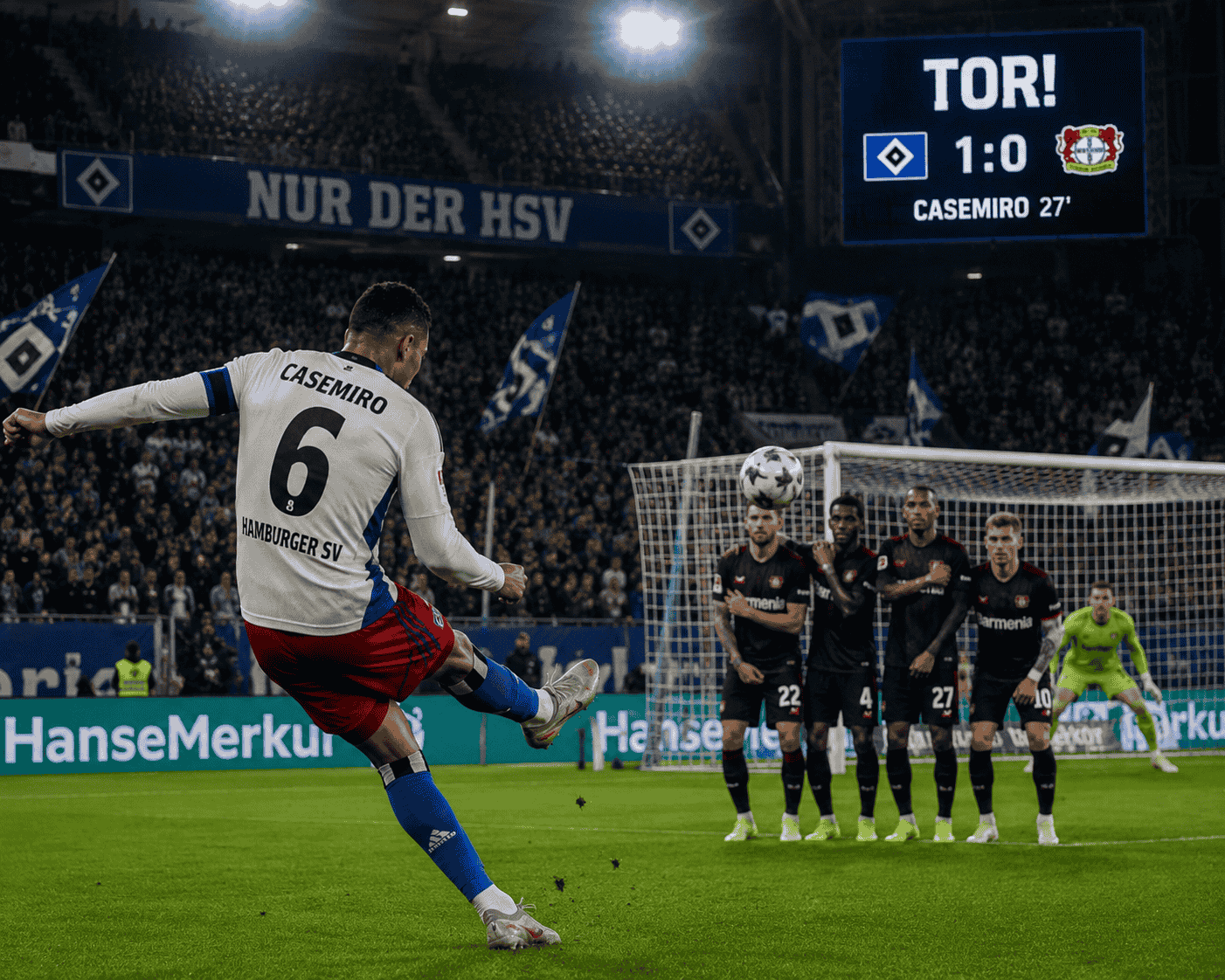
The strangest statistic of the season belongs to Casemiro.
The Brazilian defensive midfielder somehow finished with 12 league goals.
Not twelve goal contributions. Twelve goals.
That was more than Greenwood. More than Sané. More than Ekitiké.
For a player whose job description begins with the word “defensive”, it was an extraordinary contribution. Whether we can rely on another twelve-goal haul from a 34-year-old holding midfielder remains to be seen — but for S27, it was a huge factor in our improvement.
Predicted 15th. Finished 12th.
Pre-season projections based on squad strength weren’t particularly optimistic. The model ranked Hamburg 15th for expected finish.
We ended up 12th.
Not enough to trouble the European places. Not enough to make headlines. But comfortably clear of relegation danger and three places above prediction.
For a club that spent much of S26 staring into the abyss, that’s meaningful progress.
Looking Ahead to Season 28
A year of trading up leaves us with a noticeably stronger spine. This is how the first team shapes up — and how far it’s come in twelve months:
First Team Starting XIs
| Position | Season 27 (4-2-3-1) | Rat | Season 28 (4-3-3) | Rat |
|---|---|---|---|---|
| GK | Bounou | 90 | Bounou | 90 |
| RB | Partey | 90 | Semedo | 89 |
| CB | Otamendi | 90 | I. Martínez | 91 |
| CB | Orbán | 90 | Orbán | 90 |
| LB | Gayá | 89 | Gayá | 89 |
| DM | Casemiro | 90 | Casemiro | 90 |
| CM | Pašalić | 90 | Smit | 86 |
| CM / AM | de Arrascaeta | 91 | De Bruyne | 93 |
| RW | Sané | 92 | Sané | 92 |
| LW | Greenwood | 91 | Greenwood | 91 |
| CF | Ekitiké | 91 | Ekitiké | 91 |
De Bruyne inherits the creative reins, while the de Arrascaeta-shaped hole in the 4-2-3-1 becomes a third midfield berth in the 4-3-3 — and it’s Kees Smit who gets the nod as part of his development.
Partey may have taken a -2 in the latest review, down to 88, but his versatility remains invaluable — priceless cover across defensive midfield and right-back.
And against the division’s stronger sides, we’ll return to the 5-2-3 low block that served us so well late in S27: de Vrij steps in as a third, ball-playing central defender, De Bruyne drops alongside Casemiro, and Smit makes way for the night.
Behind them, de Vrij, Juan Jesus, Rodon, Marušić and others provide far more depth than we enjoyed a year ago. The challenge now is finding minutes for the next generation — Kees Smit, Bruno Bidon, Alessandro Marcandalli, Joane Gadou and several academy prospects will all be hoping to force their way into first-team thinking in the coming seasons.
The Future
The Youth Cup campaign ended with a heavy Round 2 defeat to eventual finalists Genoa.
That’s probably about where we are right now.
But beneath the first team there are reasons for optimism — and a fair bit of cold, hard cash. The academy did its bit for that record profit: last season’s youth front line was almost entirely cashed in, which rather shows in the drop-off up top.
Youth Starting XIs
| Position | Season 27 | Rat | Season 28 | Rat |
|---|---|---|---|---|
| GK | Brady | 80 | Whatmuff | 70 |
| RB | Mimović | 80 | Mimović | 80 |
| LB | Espinosa | 80 | Espinosa | 80 |
| CB | Gadou | 78 | Gadou | 83 |
| CB | Simpson-Pusey | 78 | Simpson-Pusey | 80 |
| DM | Smit | 82 | Huguinho | 73 |
| CM | Bidon | 85 | Smit | 86 |
| AM | James | 83 | Bidon | 85 |
| RW | Romero | 82 | R. Messi | 78 |
| LW | Monsalve | 82 | D. Rodríguez | 76 |
| CF | Guiu | 82 | Assomo | 65 |
New-player-lottery arrivals Mba, Assomo, Quintero and Mayans add bodies to the pool, while Lucas Herrington, Huguinho and Rayane Messi will be looking to build on early promise.
And for the first time in a while, Hamburg head into a new season not simply hoping to survive.
We’re hoping to improve.
That feels like progress.

 Top 100
Leave a comment